Peasants’ Land Rights Movement and the Emergence of New Social Life in Pakistani Punjab
Muhammad Qasim
4/29/20262 min read
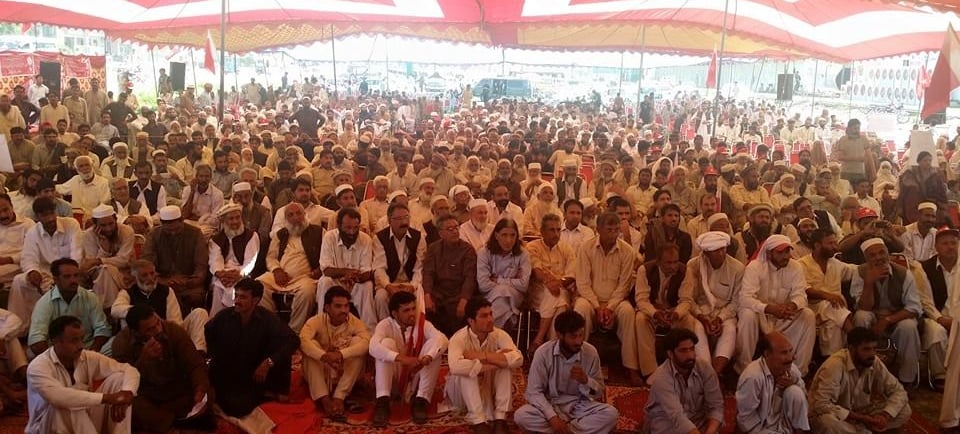
How can we interpret the peasants’ infamous chant of “ownership or death”? Does it merely refer to the ownership of agricultural land, or does it encompass something more profound? Are the peasants willing to choose death solely due to the denial of agricultural land, or is it a deeper denial for which they are prepared to sacrifice their lives? The central argument of this essay is that peasants’ struggles regarding agricultural land extend beyond resisting perceived eviction attempts. Instead, these struggles aim to achieve or safeguard the ownership of the peasants’ collective social life within their village community. This fundamental aspect of the peasants’ land rights movement is often overlooked or superficially examined in the literature on peasants’ resistance.
As Ferguson (2013) argues, the land question is often reduced to an agrarian question in the literature, disregarding the multifaceted role that land plays in the social fabric of a village community. Agricultural usage of land is just one aspect among many. Therefore, instead of focusing solely on the forms of peasants’ resistance, whether they are open/organized or everyday/hidden, this research delves into the content of the peasants’ resistance. By examining the political thought and actions of villagers and exploring the relationship between political life in rural communities and the larger political systems they are part of, we can gain a more comprehensive understanding of peasants’ politics and resistance (Kerkvliet & Benedict, 2013).
Based on 4 months of ethnographic fieldwork and my personal involvement in political activism and solidarity with the peasants’ resistance, this essay examines the resistance of peasants in the villages of Okara district in Pakistani Punjab. These peasants raised the slogan “Ownership or Death” (Malki ya Mout) in opposition to military landlordism. It is a unique form of landlordism (Sajjad, 2006) and refers to the control of agricultural land in Okara villages by the Pakistani military under the Okara Military Farms authority (OMFs). Additionally, these villages are situated on land originally developed as part of the British canal colonies project, a massive infrastructural project (Rizvi, 2019; Ali, 1988) that resulted in significant social engineering of Punjabi society (Ali, 1988) and the consolidation of military intervention in postcolonial Pakistan’s politics, economics, and society (Yong, 2005; Alavi, 1973).
In Okara villages, military-landlordism is extended beyond the appropriation of the villages’ economy through control of agricultural land; it also encompassed the control of villagers’ social life. Therefore, the peasants’ resistance is not solely focused on the ownership of agricultural land but also on the collective ownership of their social life. These dimensions of peasants’ domination and struggle have received limited exploration and discussion in the existing literature on the peasants’ resistance, which I aim to explore in detail.
The struggles of the peasantry to reclaim ownership of their collective social life, rooted in the colonial formation of their villages and the subjugation of their social existence under the neocolonial state of Pakistan, can be better understood through the framework of the four principles of liberation psychology: “recovering historical memory,” which emphasizes understanding the true history of oppression based on lived experiences and cultural heritage; “deideologizing everyday experiences,” where oppressed people employ critical consciousness to challenge imposed realities; “virtues of the people,” referring to the ability of oppressed people to sacrifice for the collective good and their belief in the capacity to change the world; and “praxis,” which involves collective action by oppressed people to liberate their colonized social existence (Comas-Diaz & Rivera, 2020, pp. 41–47)
The peasants of Okara district, under their collective organization known as Anjumen Muzareena Punjab (AMP), have successfully resisted military eviction attempts and a unilaterally introduced change in the land tenure agreement from Batiee (sharecropping system) to Patadari (rent-in-cash system) since 2000.
Contact
info@peoplesresearchinitiative.org
Join our mailing list
© 2025. All rights reserved.