Land Rights in Gilgit-Baltistan
Creating a counter archive of commons and defense of land
RESEARCH
Haider Ali
4/29/20262 min read
Crisis of Living Space
Gilgit-Baltistan presents a picture where “The sky is far, the earth is tough,” as an adage goes in Burushaski and Khowar, languages local to the area. Climate change related disasters wreak ever more havoc by the year, while the state encloses communal land and resources.
The issue of land is fundamental because it is facing a double crisis: from the state’s nationalisation aided by elite privatisation and the destruction of land through flooding and other natural disasters due to climate change. To account for these changes, we will conduct two pilot projects of mapping and documentation.
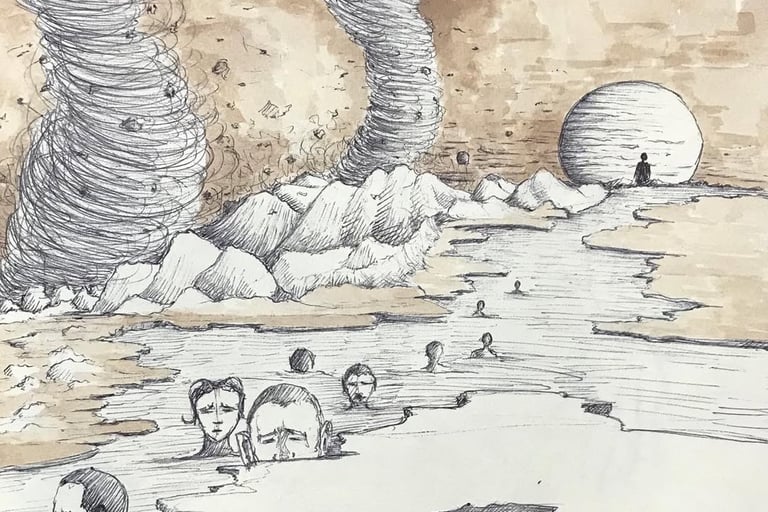
Wariso, Untitled, 2020, ballpoint on paper.
Gilgit-Baltistan and Chitral are home to the highest concentration of glaciers outside the polar regions. This makes them highly vulnerable to climate-related disasters, a frontline region where limits of global capitalist growth are starkly evident.
Concurrently, the landscape of the area is a glacial/mountainous desert where habitable land is scarce. Beyond the villages where most land is private, uncultivated/”barren” land, pastures, mountains and river beds are considered communal land within the indigenous collective understanding. For the state, it is “terra nullius,” an “empty”, “untitled” land. In a mire of colonial and postcolonial laws, any stretch of this communal land could be claimed as “state land.” In response to increasing local demands for recognition of communal land ownership, a new law that recognizes indigenous ownership of communal land while introducing new bureaucratic mechanisms to facilitate investment in mining and tourism. It is an attempt to neutralize indigenous resistance against extractive projects. This law called Gilgit-Baltistan Land Reforms Act 2025 (GBLRA 2025) has become a subject of popular protest, with those leading the movement now behind bars. This development presents a culmination of the transition in Pakistan’s policy on Gilgit-Baltistan, from one of strategic control of land and mineral resources to that of extraction.
In conjunction, climate-related disasters and enclosures shrink habitat. This participatory research is aimed at struggles to reclaim livable space.
People's archive and counter-map of traditional territory
This project moves beyond writing for an academic audience to connect anthropological and geographical research to struggles of communities against extraction and capitalist-driven climate change.
To assist communities and social movements, a counter-archive for communal land, resource defense and displacement will be created using a mix of oral history interviews and archival research. This counter-archive aims to build a "repertoire of claims" which can provide easy access to communities and their defenders to lead campaigns and legal defense of land and for adaptation.
Counter-mapping will be conducted with communities. It will begin with workshops to train interested indigenous researchers in collecting oral history interviews and in GIS data entry. Maps will be created and visualized in collaboration with and through the data provided by community members. Finally, visualization will be disseminated digitally after consultation with the community on the output maps and timelines. In case of disputes, the project prioritizes transparency in presenting multiple claims, foregoing rigid or clear boundaries.
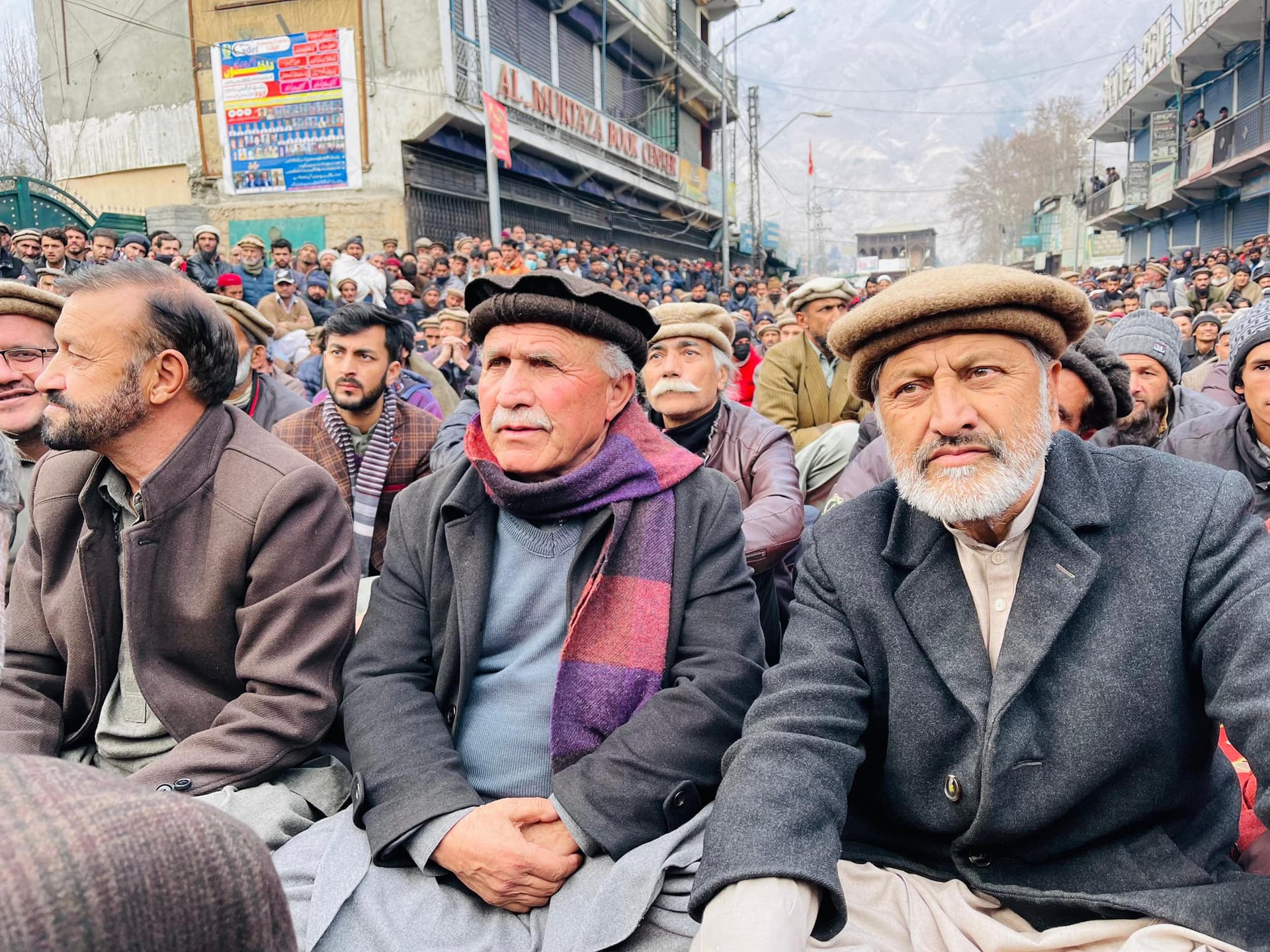
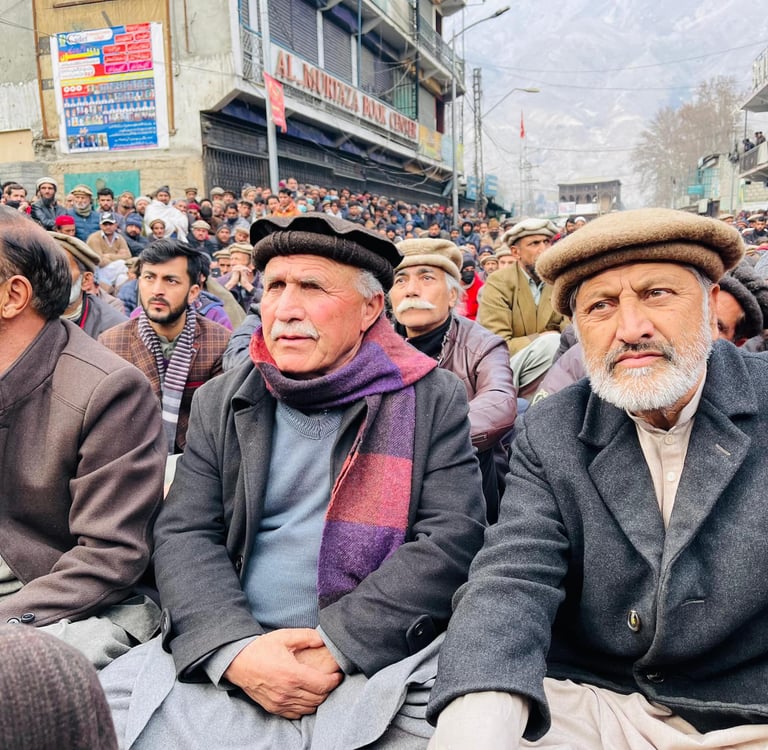
Header Image: Photo of Sit-in protest in Gilgit, 2024.
Contact
info@peoplesresearchinitiative.org
Join our mailing list
© 2025. All rights reserved.